How Sales Tax Works in the US: A Plain-English Guide
Sales tax in the US is set at state and local levels, added at the register, and remitted by sellers. Here's how the whole system works, simply explained.
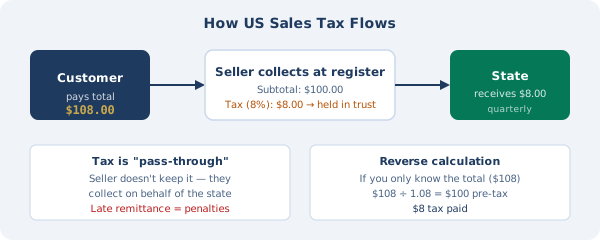
Every receipt in the US has a tax line, but the system behind that line is messy. You see the total at the register, pay it, and move on. Once you start running a business, filing expense reports, or doing any accounting, you quickly discover the mechanics matter.
This piece walks through those mechanics in plain terms.
What Sales Tax Is, and What It Isn't
Sales tax is a consumption tax levied on retail transactions. Unlike income tax (which hits what you earn), sales tax hits what you spend at the point of sale.
The business ringing you up isn't keeping the tax it charges. It's collecting on behalf of the state, holding the money in trust, and sending it in on a schedule. That distinction matters: sellers are on the hook for collecting and remitting correctly, even if a customer refuses to pay or the business makes a mistake during collection.
Sales tax in the US is entirely state and local. There's no federal sales tax. The federal government taxes consumption through excise taxes on specific goods (fuel, tobacco, alcohol), but there is no general sales tax at the federal level.
How Rates Are Structured
Every state with a sales tax sets a base rate. States then typically let local jurisdictions (counties, cities, transit districts, stadium districts) pile their own rates on top.
That layering is why "California's sales tax rate is 7.25%" is technically correct but practically incomplete. Los Angeles adds 3%, pushing the combined rate to 10.25% across most of LA County. San Francisco adds 1.25% (combined: 8.625%). A small town in a low-tax county might sit at 7.75%.
The Tax Foundation tallies these into combined averages by state. Their 2024 data shows Tennessee and Louisiana tied at 9.55% combined average. Both states have moderate state rates but aggressive local additions.
States with no sales tax: Oregon, Montana, New Hampshire, Delaware, and Alaska (though Alaskan localities can impose local taxes up to 7.5%).
Who Collects Sales Tax (and Who Doesn't Have To)
Not every seller in a state collects that state's sales tax. Collection is triggered by nexus, which is the legal connection between the seller and the state that's sufficient to require compliance.
Nexus used to be simple: physical presence. An office, a warehouse, or an employee working in a state created nexus there. No physical presence, no obligation to collect.
The 2018 Supreme Court decision in South Dakota v. Wayfair changed that by adding economic nexus as a trigger. In most states, the threshold is $100,000 in sales or 200 transactions in a calendar year. Cross that threshold and you're required to register, collect, and remit, even if you've never set foot in the state. The full story on how this affects online sellers is in our writeup on sales tax on online purchases.
For large e-commerce sellers, this means sales tax compliance in potentially 45+ states.
What's Taxable (and What Isn't)
States generally tax tangible personal property, meaning physical goods you can touch. Exceptions are everywhere:
- Groceries: Most states exempt unprepared food. Some tax it at a reduced rate. A few (like Tennessee and Alabama) tax food at the full rate.
- Prescription drugs: Exempt in most states.
- Clothing: New York and Pennsylvania exempt most clothing. Minnesota exempts clothing under $100.
- Digital goods: Increasingly taxable in many states, but rules vary widely for software, streaming, downloads, and SaaS products.
- Services: Generally not subject to sales tax unless the state specifically taxes the service (some states tax haircuts, repair services, storage, and so on).
The taxability matrix varies so much by state that businesses selling diverse products across many states often rely on specialized software to keep up.
How Tax Is Collected at the Register
At the point of sale, the seller applies the applicable tax rate to the taxable portion of the transaction total. That result is added to the subtotal to produce the total amount due.
On the receipt, you'll typically see:
- Subtotal: the pre-tax total of your items
- Tax Rate: the percentage applied
- Tax Amount: the tax in dollars
- Total: subtotal plus tax
If you only have the total and need to work backwards, the reverse tax calculator extracts the pre-tax price and tax amount instantly. The division method, and why subtracting gives the wrong answer, is covered in our guide to calculating sales tax backwards.
How Businesses Remit Sales Tax
Collected tax sits in the business's accounts temporarily. At the end of the filing period, the business submits a sales tax return to each state where it's registered and remits the collected amount.
Filing frequencies:
- Monthly: typically required for businesses collecting above a state-set threshold (often $10,000+ per month in tax collected)
- Quarterly: the most common frequency for small to mid-size businesses
- Annually: allowed in some states for very small filers
Late remittance triggers penalties, typically 5 to 25% of the amount owed, plus interest. "I accidentally spent the collected tax" is not a defense.
How Customers Get Credit for Sales Tax Paid
In most states, sales tax paid is simply a cost of consumption. You don't get it back.
Exceptions:
- Out-of-state purchases: If you buy something online and pay sales tax to one state, then bring it to your home state, you may owe "use tax" to your state. You typically get a credit for the tax already paid, so you don't pay twice.
- Business expense deductions: Businesses can generally deduct sales tax paid on business purchases as a business expense. If they're a sales-tax-registered business buying for resale, they may be exempt at the point of purchase using a resale certificate.
- Itemized deductions on federal returns: Individual taxpayers who itemize can deduct either state income tax or state and local sales tax (not both). The IRS has a calculator for estimating sales tax paid if you don't have records.
Audits and Record-Keeping
State tax authorities audit businesses for sales tax compliance. Common audit triggers: a competitor tips off the state, discrepancies between income tax filings and sales tax filings, or random selection.
What auditors look for:
- Were all taxable sales taxed?
- Were exempt sales actually exempt (were resale certificates collected)?
- Were collected amounts remitted in full and on time?
- Were out-of-state purchases subject to use tax?
The standard record retention requirement is 3 to 7 years, depending on the state.
The Reverse Tax Calculation
Any time you only know the tax-inclusive total and need the pre-tax breakdown, reverse tax calculation gives you the answer. It shows up constantly in real accounting work: processing receipts for expense reimbursement, reconciling vendor invoices that bake in tax, or double-checking a receipt's math before it hits the books.
For more on the specific situations where this calculation matters, see 7 sales tax mistakes small businesses make and our guide to verifying receipt taxes.